


Rising interest rates, declining home sales, and aggressive builder incentives are reshaping the U.S. housing market. Discover what is happening and what it means for international buyers and investors considering real estate opportunities in Florida.
The U.S. real estate market is undergoing a significant transformation. After years of strong appreciation, particularly during the pandemic, the housing market is showing clear signs of a slowdown: fewer buyers, longer listing periods, canceled contracts, and sellers who are increasingly willing to negotiate.
This raises an important question: Are we heading toward another housing crisis like 2008, or is the market simply experiencing a natural correction?
The answer requires careful analysis. While several indicators are concerning, today’s market is fundamentally different from the conditions that triggered the previous financial crisis.
For international buyers, particularly those interested in purchasing a home, relocating to the United States, or investing in Florida real estate, understanding these changes can make a significant difference in making informed decisions.
Table of contents
- U.S. home sales are slowing down
- How high mortgage rates are affecting the housing market
- Homebuilders are offering discounts and incentives
- Is the market shifting in favor of buyers?
- Why is Florida experiencing a real estate market adjustment?
- Special considerations when buying condominiums in Florida
- Are we heading toward another 2008 housing crisis?
- What does this mean for international real estate investors?
- Is 2026 a good time to buy real estate in the United States?
- Conclusion: A market of opportunities that requires careful planning
U.S. home sales are slowing down
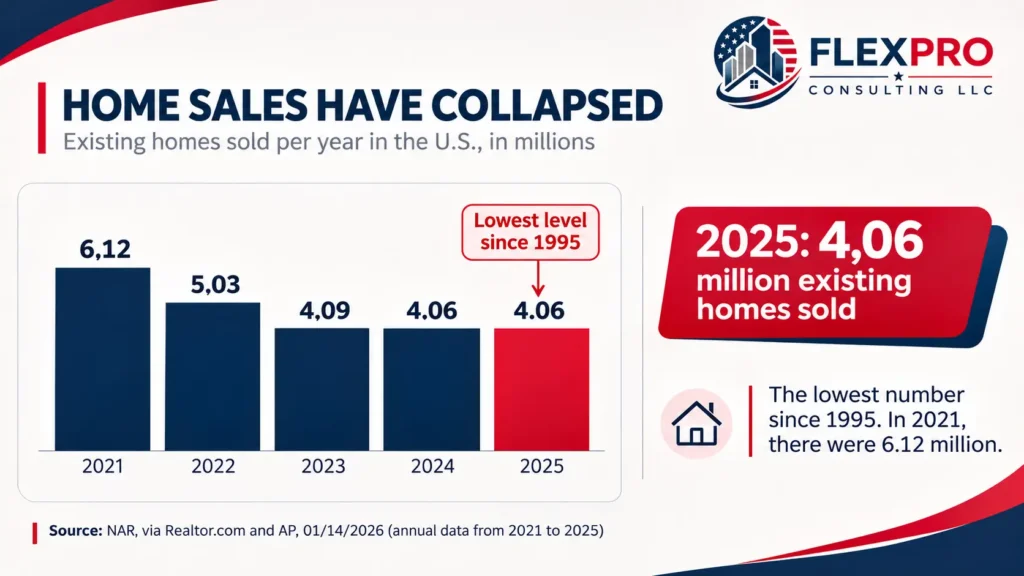
One of the clearest signs of a changing market is the decline in real estate transactions.
According to the National Association of Realtors (NAR), pending home sales fell 7.3% in September 2026 compared to the previous month and 11.3% compared to the same period in 2025.
But what exactly are pending home sales?
In the United States, when a buyer submits an offer and the seller accepts it, the property typically enters pending status. This means a purchase agreement has been signed, but the transaction has not yet closed.
During this stage, several steps may still need to be completed, including mortgage approval, property inspections, and verification of contractual conditions.
Pending home sales are therefore considered a leading indicator of housing market activity.
When pending sales decline, fewer properties are moving toward the final stages of a transaction, potentially signaling lower completed sales in the months ahead.
Another important indicator comes from Redfin: approximately 14.5% of home purchase agreements were canceled in September 2026.
This reflects a market in which buyers are becoming increasingly cautious and, under certain circumstances, more willing to walk away from a transaction.
How high mortgage rates are affecting the housing market
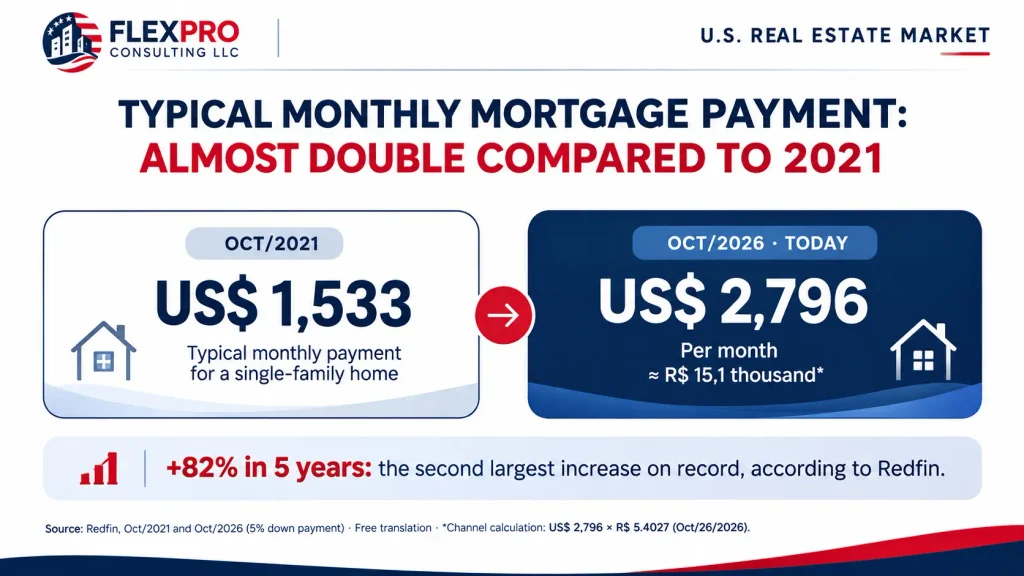
One of the main reasons behind the housing market slowdown is the cost of financing.
During the pandemic, many American homebuyers secured mortgage rates near 3%, with some obtaining even lower rates.
That environment has changed dramatically.
In October 2026, the average 30-year mortgage rate reached 7.40%, according to Freddie Mac. By October 29, the average had declined to 7.24%.
Although these percentage differences may seem relatively small, their financial impact can be substantial.
A family that purchased a home when mortgage rates were around 3% may have a significantly lower monthly payment than someone financing a similar property today.
This creates two major effects.
First: potential buyers postpone purchasing decisions because mortgage payments consume a larger share of household income.
Second: homeowners who secured low mortgage rates years ago are reluctant to sell their properties and purchase new homes with substantially higher financing costs.
This phenomenon is known as the mortgage rate lock-in effect.
The result is a housing market with reduced activity on both the supply and demand sides.
Homebuilders are offering discounts and incentives
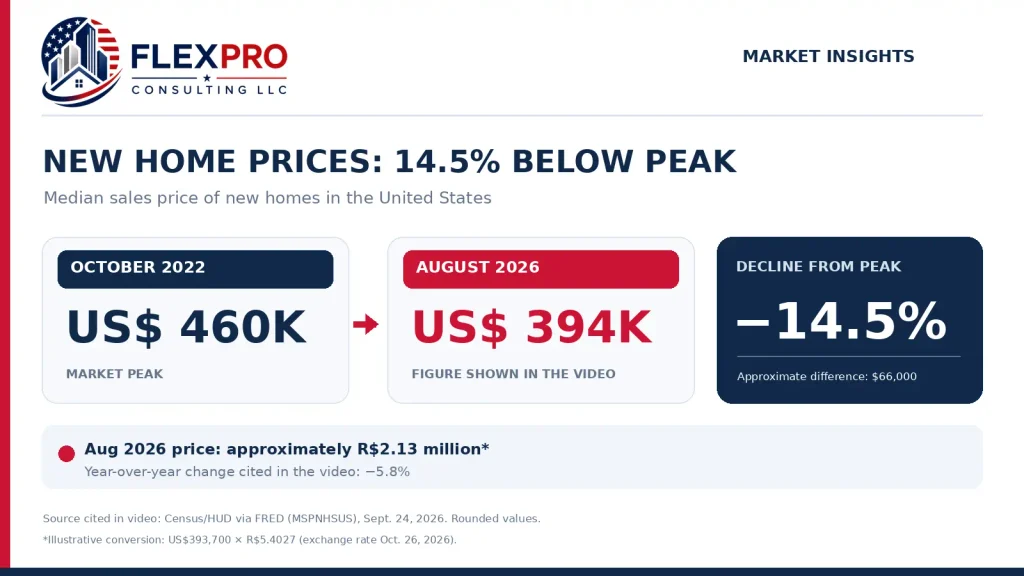
Another important market development involves homebuilders.
Unlike individual homeowners, who may be able to wait for a better offer, construction companies must maintain their operating cycles.
They acquire land, develop projects, build properties, and depend on sales revenue to finance future developments.
When sales slow down, inventories of completed homes can create financial pressure.
As a result, many builders have adopted more aggressive sales strategies, including:
- Reductions in asking prices.
- Contributions toward closing costs.
- Temporary or permanent mortgage rate buydowns.
- Complimentary upgrades and additional finishes.
- Special financing or purchase incentives for completed new-construction homes.
In certain communities, these incentives can make newly constructed homes financially more attractive than existing properties.
However, buyers should carefully compare the total cost of ownership, including property taxes, insurance, homeowners association fees, and any conditions associated with builder incentives.
A discounted asking price does not automatically make a property a good investment.
Is the market shifting in favor of buyers?
During the pandemic, many U.S. housing markets experienced extraordinary competition.
Properties received multiple offers, buyers frequently bid above asking prices, and opportunities to negotiate were limited.
Today, that environment is changing in several markets.
According to Realtor.com’s October 2026 housing report, 20.5% of active listings nationwide had experienced price reductions during the month.
This suggests that sellers are increasingly adjusting their expectations to market conditions.
In a buyer’s market, purchasers may benefit from a wider selection of properties, more time to evaluate their options, and greater negotiating power.
However, there is one important consideration: Not all U.S. real estate markets are behaving the same way.
Property values depend not only on national economic conditions but also on local factors such as housing supply, employment growth, population trends, infrastructure, and demand.
As a result, some metropolitan areas may experience price declines while others continue to appreciate.
Why is Florida experiencing a real estate market adjustment?
Florida was one of the states that attracted the largest numbers of new residents during the pandemic.
Many families relocated from New York, California, and other high-cost states in search of a different lifestyle, favorable weather, and employment opportunities.
This migration increased housing demand and contributed to significant price appreciation in several Florida markets.
At the same time, homebuilders expanded residential developments to accommodate anticipated population growth.
As migration patterns normalized, interest rates increased, and more homes entered the market, certain areas began experiencing an imbalance between housing supply and demand.
Markets that deserve close attention include Orlando, Tampa, Cape Coral, Punta Gorda, and other communities that experienced substantial growth in recent years.
However, this does not mean the entire Florida real estate market is facing a crisis.
Market conditions can vary significantly between cities, neighborhoods, and even neighboring residential communities.
Orlando: Why neighborhood-level analysis matters
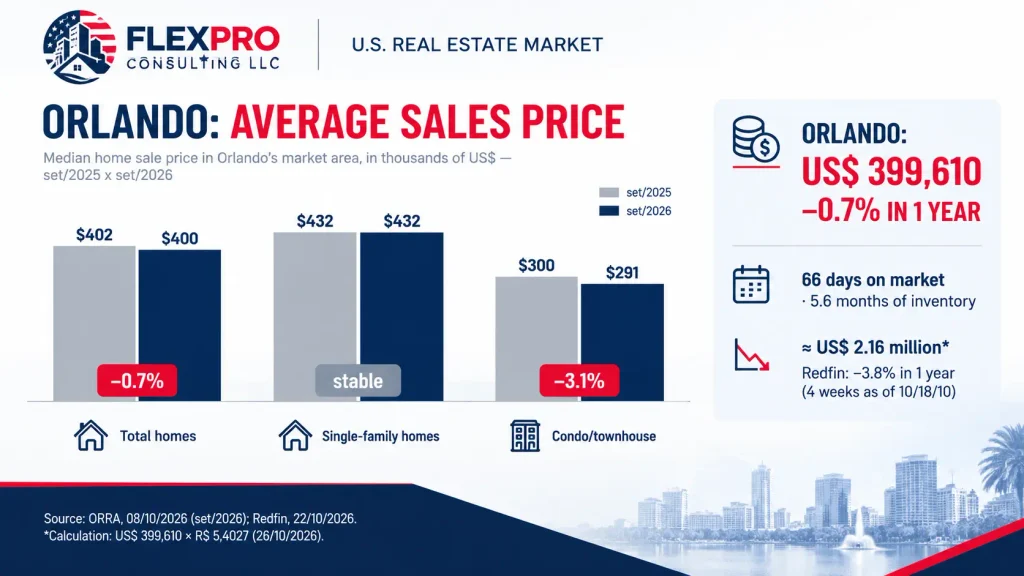
Orlando’s real estate investment remains an important destination for international buyers and real estate investors.
However, treating the Orlando metropolitan area as a single housing market can lead to inaccurate conclusions.
Communities such as Lake Nona, Winter Garden, Windermere, Davenport, and Celebration have different characteristics in terms of demographics, property availability, infrastructure, ownership costs, and rental potential.
Lake Nona, for example, has experienced substantial residential and infrastructure development.
In areas with a high concentration of new construction, increased inventory may create additional competition for existing homes.
For buyers, this can translate into more choices and better negotiating opportunities.
For investors, however, it is essential to determine whether a property’s purchase price aligns with actual rental demand, operating expenses, and long-term objectives.
Special considerations when buying condominiums in Florida
One segment that requires particular attention is the condominium market, especially older buildings.
Following the collapse of Champlain Towers South in Surfside in 2021, which resulted in 98 deaths, Florida introduced stricter structural inspection and maintenance requirements for certain residential condominium buildings.
These regulatory changes have increased attention on condominium financial reserves and the funding needed for repairs and maintenance.
In some buildings, property owners have faced substantial additional charges known as special assessments.
These assessments may cover structural repairs, major system replacements, and other necessary improvements.
For buyers considering condominiums, particularly in coastal areas, it is essential to review the building’s condition and financial obligations before completing a purchase.
A property may appear attractively priced, but significant condominium expenses can dramatically change the overall investment equation.
Are we heading toward another 2008 housing crisis?
Comparisons with the 2008 financial crisis are understandable, but the underlying conditions require careful consideration.
The previous housing crisis was driven by a combination of risky mortgage lending, excessive leverage, widespread defaults, and large-scale foreclosures.
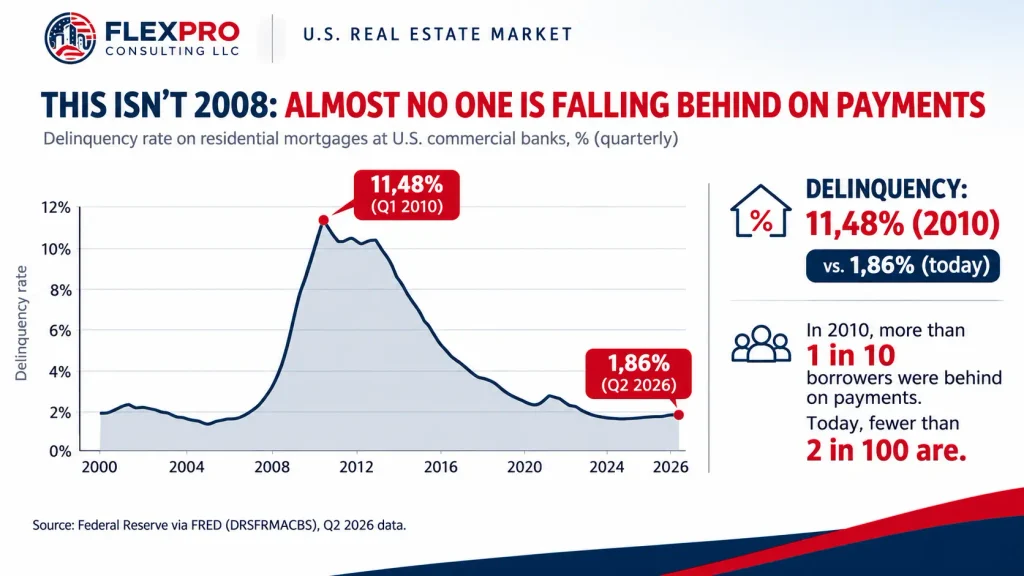
Today’s housing market faces a different set of challenges.
The primary obstacle is declining housing affordability caused by the combination of elevated property prices and high mortgage rates.
Additionally, many existing homeowners hold mortgages with significantly more favorable financing terms than those currently available.
Although some regions are experiencing price declines and rising inventory, these developments do not automatically indicate a nationwide housing collapse similar to the previous financial crisis.
That does not mean risks have disappeared.
A significant deterioration in employment, a prolonged recession, or increased stress in credit markets could create additional pressure on housing prices.
The conclusion is straightforward: The market is clearly experiencing a slowdown and adjustment, but current conditions do not justify assuming that another 2008-style crisis is inevitable.
What does this mean for international real estate investors?
For international investors, a less competitive housing market may create opportunities that were difficult to find during periods of rapid appreciation.
However, purchasing a primary residence and acquiring an investment property involve very different objectives.
Homebuyers planning to live in the property may prioritize location, lifestyle, schools, infrastructure, and family needs.
Real estate investors must also consider rental income potential, operating expenses, liquidity, appreciation prospects, and risk exposure.
Several factors deserve particular attention:
Location analysis: Real estate performance varies by neighborhood and community. National housing statistics should never replace local market research.
New construction versus resale properties: Builder incentives may offer attractive opportunities, but location, construction quality, and total ownership costs must be considered.
Insurance and property taxes: In Florida, these expenses can represent a significant portion of annual property ownership costs.
HOA and condominium assessments: Buyers should understand association fees, financial reserves, maintenance obligations, and the possibility of future special assessments.
Currency exchange exposure: International buyers transferring funds from other currencies should consider how exchange-rate fluctuations may affect purchasing power and overall acquisition costs.
Investment strategy: Properties intended for rental income should be evaluated differently from homes purchased for personal use or long-term capital appreciation.
The most important consideration is avoiding decisions based solely on expectations that property values will rise or fall in the near future.
Is 2026 a good time to buy real estate in the United States?
The answer depends on each buyer’s financial situation and objectives.
Market conditions are creating greater negotiating opportunities in several regions. Price reductions, builder incentives, and increased housing inventory may benefit buyers who are financially prepared and capable of identifying attractive opportunities.
On the other hand, no one can guarantee that property prices will not continue declining over the coming months or years.
A property purchased today may experience short-term depreciation while potentially appreciating over a longer investment horizon. It may also perform below expectations.
For this reason, purchasing decisions should consider acquisition costs, ongoing expenses, location, intended use, and investment time horizon.
Rather than attempting to predict the exact bottom of the market, buyers should focus on whether a particular acquisition fits within a well-defined financial and investment strategy.
Conclusion: A market of opportunities that requires careful planning
The U.S. real estate market is going through an adjustment period, creating both challenges and opportunities for buyers and investors.
Higher mortgage rates have reduced purchasing power, transaction volumes have slowed, and sellers and homebuilders are adapting to a market that looks very different from the one experienced during the pandemic. In Florida, these changes are not uniform. Market conditions can vary significantly from one city to another, and even between neighboring communities.
In a market like this, having the right information and local expertise can make all the difference. What appears to be a great deal on the surface may come with hidden costs or risks, while opportunities with strong long-term potential may not always be immediately obvious.
That’s why working with an experienced local consulting firm matters. At FLEXPRO Consulting, we help international buyers and investors navigate the complexities of the Florida real estate market, providing market insights, personalized guidance, and strategic support to help them evaluate opportunities and make informed decisions.
Because in real estate, making the right decision is not just about when you buy, it’s about what you buy, where you buy, and having the right people by your side.
Sources: National Association of Realtors (October 2026), Redfin (October 2026), Freddie Mac (October 2026), Realtor.com (October 2026).
Thinking About Buying or Investing in Florida Real Estate?
Contact FLEXPRO Consulting to learn more about our approach to helping international clients identify and evaluate real estate investment opportunities in the Orlando area.